
Irvine City Directory Collections by Era
The first task is to name the collection honestly. Orange County was created in 1889, and Irvine incorporated in 1971, so people connected to the ranch or early villages may appear under a county, Santa Ana, acreage, employer, or ranch heading. The table separates verified title and date clues from gaps that still need volume-by-volume checking.
| Collection | Years | Publisher or Holder | Access |
|---|---|---|---|
| Milliken's Orange County Directory | 1895-1896 | California Directory Co. | County genealogy or archive lead; verify holding |
| Orange County Directory | 1903 | Orange County Directory Co.; J.N. Stephens and L.H. Pagham | Check locality inclusion and entry form |
| Santa Ana and Orange County directories | 1905-1931 | Santa Ana Public Library History Room citation | Volume-by-volume history-room research |
| Orange County directories | 1928-1952 | Santa Ana historical-record citation | Overlapping description; do not assume every year survives |
| Circa-1930 Orange County grouping | Circa 1930 | NARA census research inventory | Inspect the holding institution or image |
| OCPL genealogy databases and newspapers | Varies | OC Public Libraries and database vendors | Card, branch, and license rules apply |
| Orange County Archives holdings | Varies | County Archives | Request title and year inventory |
No authoritative catalog verified an exhaustive Irvine-titled city directory series or a continuous reverse-directory run. The gap is a research result. It is better to record “not located” than to turn a county volume into a city series.
- 1889: Orange County separated from Los Angeles County, creating the county record setting for later directory research.
- 1895-1896: Milliken's Orange County Directory supplied the verified acreage-owner lead.
- 1903: An Orange County Directory was documented with its publisher and named editors.
- 1905-1931: Santa Ana and Orange County directory citations provide a countywide history-room trail.
- 1928-1952: Overlapping Orange County descriptions extend the cited mid-century shelf, without proving every surviving year.
- 2025: Irvine Public Library became its own system, changing the card, catalog, and access context for local-history work.
Why the Irvine City Directory Starts Before Irvine
Irvine's name became a city label after the Irvine Ranch and university village landscape was already being recorded. The 1895-1896 Milliken volume is therefore useful because it names resident acreage owners in a county gazetteer and business setting, not because it is an Irvine municipal directory. A person tied to the ranch may be indexed by acreage, locality, or employer rather than by a modern street.
The same caution applies to the 1903 county directory and the Santa Ana and Orange County runs. A countywide book can hold Irvine-area clues while omitting a particular tract, and a later directory can use a street that did not yet exist. Date the place first, then search the volume's locality headings and page images.
The OCPL history and genealogy resources are a useful starting point for the countywide shelf.
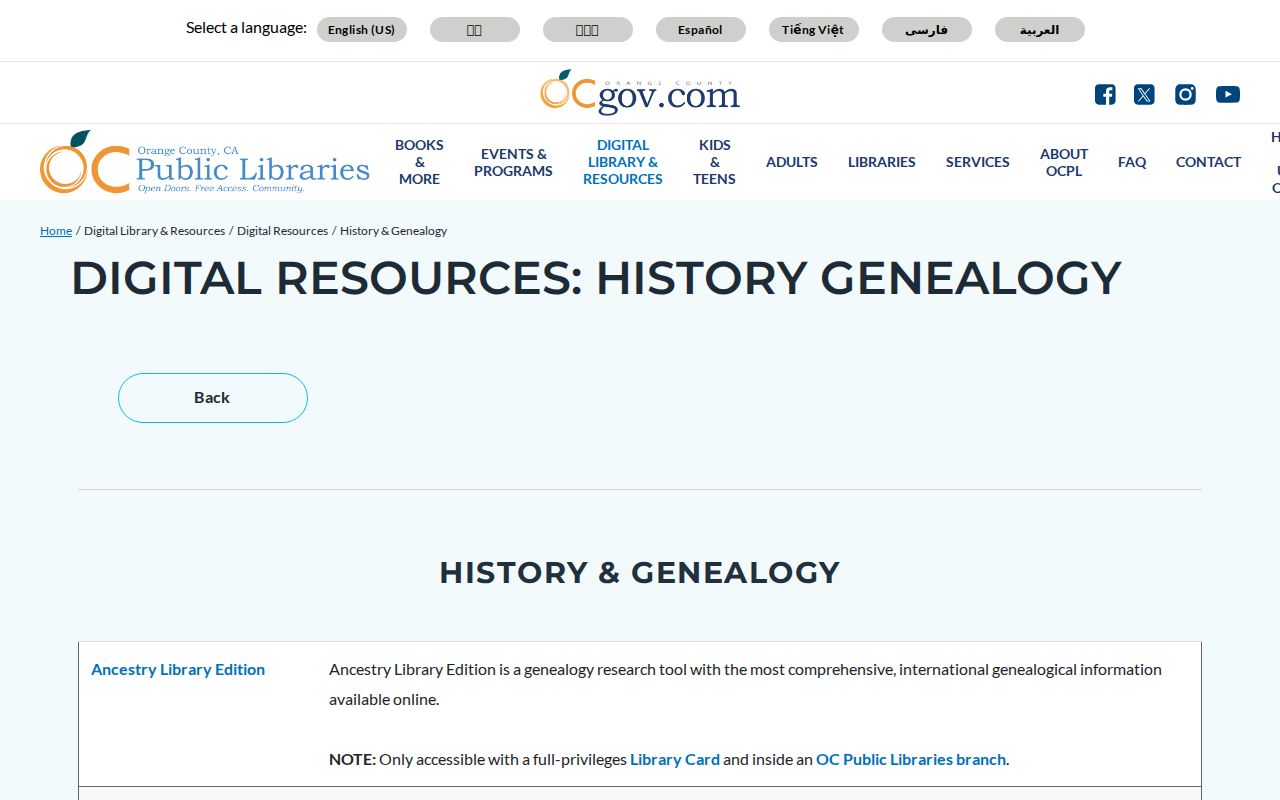
The library resource page is a research doorway, not proof that a specific title or year is currently on an open shelf.
Milliken's Irvine-Area Directory Lead
Milliken's Orange County Directory for 1895-1896 was 205 pages and is described as a county gazetteer and business directory that also named resident owners of acreage property. That combination makes it unusually relevant to Irvine Ranch-era people. An acreage-owner entry can establish that a person was tied to land or a locality in the volume's year, but it does not by itself establish a modern street address, every household member, or a continuous residence.
Transcription should preserve the exact printed spelling, locality, category, and any acreage or business wording. If an entry points to a ranch, farm, or county place, record that wording instead of silently changing it to Irvine. Pair the result with a deed, census schedule, newspaper, or later directory before making a family or address claim.
Research note: the historical record describes the volume and its contents, but no authoritative open scan was available for a field-by-field Irvine entry inspection. A catalog or holding institution should confirm the page before any detailed transcription.
Santa Ana Shelves County City Directory Runs
Santa Ana Public Library History Room documentation cites Santa Ana and Orange County directories for 1905-1931 and Orange County directory descriptions for 1928-1952. Those ranges overlap, but an overlap is not a guarantee that every annual volume remains. Ask for the exact title, publisher, year, and locality index, then note whether the volume is bound, microfilmed, digitized, or available only through staff.
A Santa Ana heading is not a reason to discard an Irvine person. It is a signal to inspect the county section, nearby locality pages, acreage references, and street order if present. The same approach helps with names that changed spelling or moved between ranch and village settings.
The OCPL genealogy hub points to Ancestry Library Edition, Fold3, HeritageQuest, obituary help, and local organizations.
Database access can depend on a full-privileges library card or in-branch use, so a search result should include the access setting as well as the name.
NARA's Circa-1930 Irvine Directory Grouping
The National Archives census research inventory places Irvine within an Orange County circa-1930 city-directory grouping alongside Anaheim, Santa Ana, Tustin, Newport Beach, and other communities. That listing is a finding aid. It tells a researcher where an Orange County directory companion may sit beside the 1930 census; it does not promise a stand-alone Irvine volume or a complete scan.
Use the directory and census together. A directory can give a name and local address clue, while the census can show household relationships and an enumeration location. The two sources were made for different purposes, so a mismatch can reflect timing, spelling, a move, or a locality label rather than an error.
The NARA city-directory inventory identifies the Orange County grouping.
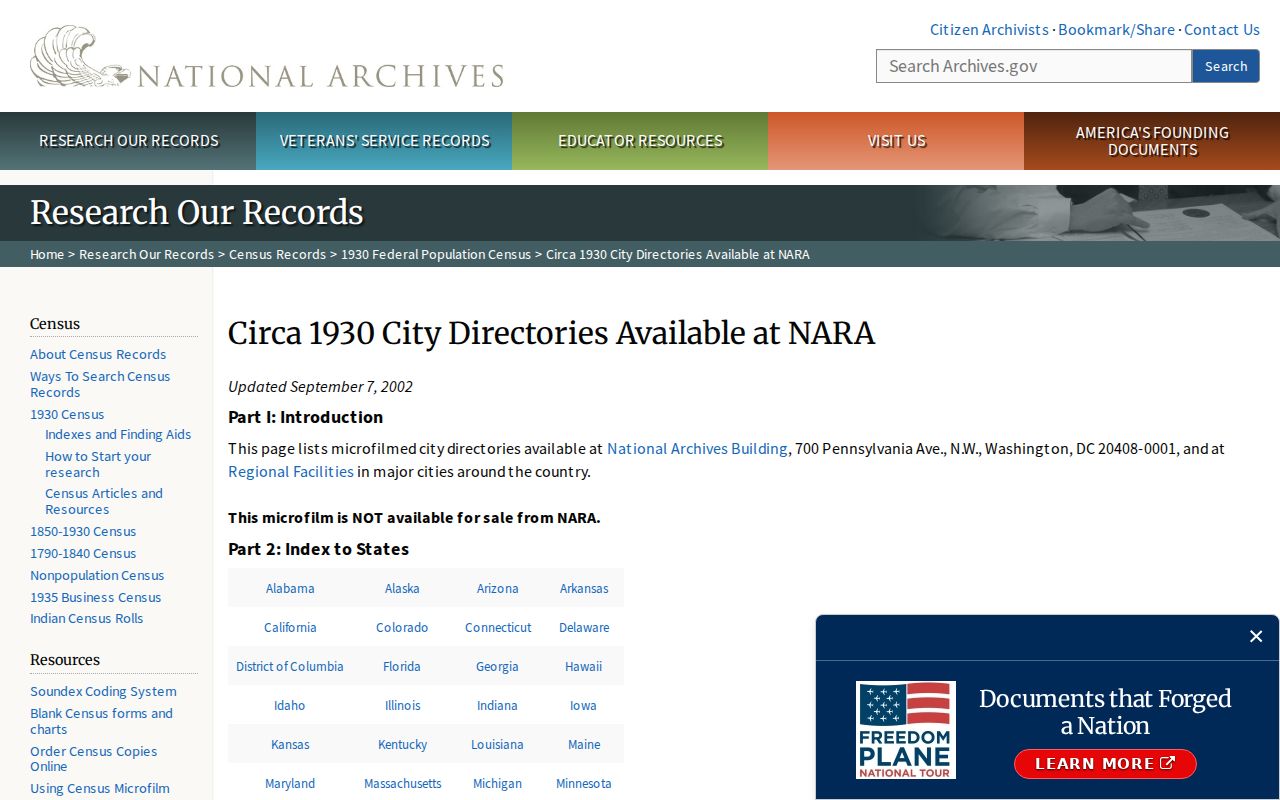
Keep the NARA listing as the route to a holding or image, not as evidence that every Irvine resident appears in one directory.
Reading an Irvine City Directory Entry
No authoritative open scan of a specific Irvine entry was available for inspection. The safest city directory method is conservative transcription: write what the page shows, keep the abbreviation key, and label any field that was not visible rather than filling it from a generic directory pattern.
| Name | Copy the exact printed spelling, initials, suffix, and any locality heading. |
|---|---|
| Occupation or employer | Record it only when the selected volume actually prints it. |
| Address | Copy the printed house number, street, acreage, or locality; do not retrofit a modern street. |
| Household marks | Spouse, widow, owner, renter, or boarder marks were not verified for an Irvine entry. |
| Abbreviations | Photograph or transcribe the key and do not silently expand a short form. |
- Criss-cross directory
- A street-order or address-to-name section, if a particular volume contains one.
- Householder index
- A name-oriented list that may point to a household or address; the exact structure varies.
- Abbreviation key
- The printed guide that explains the short forms used by that publisher.
- Locality heading
- The county, ranch, town, or village label under which an entry was filed.
UCI's Irvine History Collection Adds Context
When a city directory does not name a modern street, UCI's Orange County Regional History Collection can supply the setting around the person. The collection, founded in 1972, is strong in Irvine Ranch and Irvine Company material, agriculture, conservation, politics, ethnicity and culture, arts, county histories, and family papers. Named paths include the George Leidal City of Irvine collection and Irvine Ranch or Irvine Company materials.
UCI Special Collections is a research and duplication desk, not a current resident directory. A person appearing in a ranch narrative, family paper, political ephemera file, or community collection should be cited to the collection and document rather than described as a current resident. The campus research setting also explains why pre-incorporation evidence may live outside a municipal shelf.
The UCI Orange County Regional History research page describes the collection and research contact.
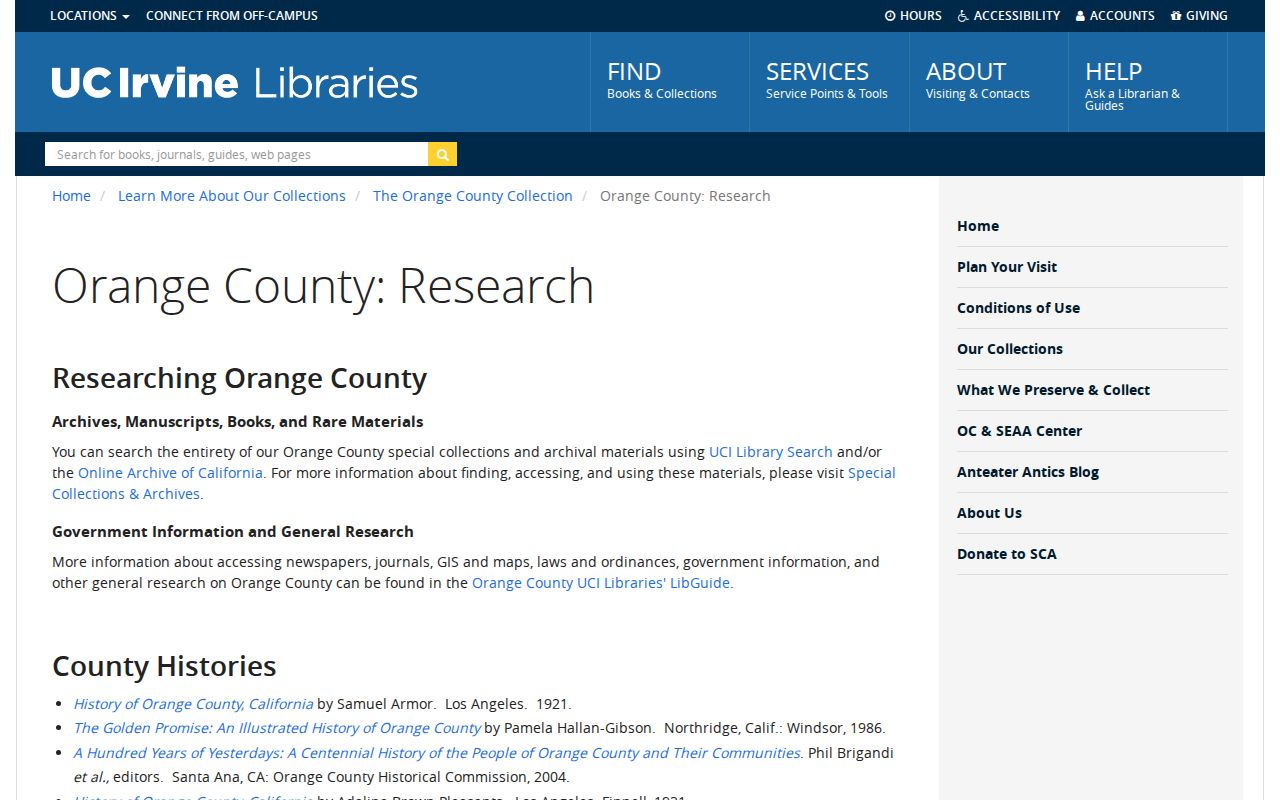
UCI's collection is especially useful when the directory clue is ranch-era, campus-linked, or community-based rather than a clean city street entry.
Orange County Archives Fill City Directory Gaps
Orange County Archives names directories and newspapers among its holdings, alongside historic Board, court, property, and county-government series. The archives can be the bridge when a library database returns a title but no scan, when a county volume is described without a shelf location, or when a person's record appears in a government series rather than a printed directory.
California State Archives is another fallback for selected county and government materials. A request should name the person, likely locality, record type, date range, and the directory or collection clue already found. Reproduction rules and reading-room or staff-mediated access can differ, so a researcher should ask for the title and year inventory before assuming the item is immediately viewable.
The Orange County Archives entry page identifies the county repository.
Archive access turns a vague Irvine city directory reference into a request for a named title, year, and holding.
Tracing Irvine Households Across Directory Years
A city directory is strongest when treated as a dated point in a longer family-history sequence. Start with a known name, then follow the spelling and address through the years that actually exist. Pair the directory with the released federal census, newspapers, obituary resources, and deeds when the goal is to distinguish a move from a death or a missing volume.
- Write the person's full name, variants, locality, and the first likely directory year.
- Read the volume's locality and abbreviation keys before copying the entry.
- Follow the name forward and record every printed address, acreage, occupation, or household mark.
- Pair a directory point with the closest census year, using the household relationship and enumeration location as a check.
- Search OCPL newspapers, the obituary workflow, cemetery sources, probate indexes, or a deed trail when the directory entry disappears.
The latest released federal census is 1950 under the 72-year rule as of 2026, with 1960 due in 2032. A post-1960 Irvine household may need newspapers, permits, deeds, yearbooks, library databases, or a confirmed telephone or reverse-directory holding. Disappearance can mean a move, death, an unlisted person, an absent year, or a changed locality label. It is not a finding by itself.
OCPL's obituary guidance identifies the California Death Records Index for 1940-1997, NewsBank and Orange County Register coverage after January 1, 1987, and earlier Register microfilm. Use those routes to close a family-history trail, then verify any copy through the proper custodian.
Irvine City Directory Access After the Library Transition
Irvine's library system changed context in 2025. The city formally established Irvine Public Library on July 1, 2025 after a 2024 transition decision, while branch and lease schedules differed by location. An older OCPL note may point to the right collection but the wrong card, catalog, login, or building. Confirm the current holder before relying on a database or shelf.
Orange County Public Libraries still supplies documented genealogy leads, including Ancestry Library Edition in branches, HeritageQuest, Fold3, local newspapers, obituary help, and community-history collections. Staff assistance can be more reliable than a broad name search when OCR misses a surname or a directory is filed under Orange County rather than Irvine.
The city's future Irvine Public Library planning article is useful context for a collection search, but planning information is not proof that a particular volume is currently available.
The California State Archives provides a separate historical-research fallback.
Access status belongs in the research notes. A correct title with an outdated access route is still an incomplete city directory lead.