
Irvine Resident Lookup Coverage
The best first source depends on the clue. An address points toward a parcel and recorded deed. A name with a date may fit a court index or vital index. A business connection belongs in the Secretary of State or Clerk-Recorder business route. An older Irvine resident may surface first in a newspaper, directory, cemetery record, or unclaimed-property result. The table shows what each channel can confirm and where its edge lies.
| Record | What It Can Confirm | Where to Search | Access Boundary |
|---|---|---|---|
| Parcel or assessment | Assessed owner, APN, parcel and tax context | Orange County Assessor or counter | Owner is not automatically an occupant |
| Recorded deed | Transfer parties, date and legal parcel | RecorderWorks | Index online; image ordered separately |
| Voter record | Authenticated person's status, address, party and district | Orange County voter self-service | Not anonymous public browse |
| Superior Court index | Case number, party role, dates and public docket events | Orange Superior Court | Fees, sealed matters, and visibility vary |
| Vital record or index | Birth, death, marriage or relationship evidence | County Clerk-Recorder or CDPH | Copy type and eligibility rules apply |
| Business or license record | Formal affiliation, status, credential or filing | California SOS, FBN or DCA | Business address is not home proof |
| Unclaimed property | Older name and reported city or address link | State Controller | Historical lead; claimant must prove entitlement |
Start with a source that can answer the narrow question. If the task is who owns a parcel, use the address and deed route. If it is whether two namesakes are the same person, combine independent dates and roles. If it concerns a family relationship, use the vital and genealogy path instead of inferring a relationship from a directory.
Normalize an Irvine Name Before Searching
Same-name errors begin before the first portal opens. Record the complete name as printed, then add middle initials, suffixes, former or married forms, transliteration variants, likely age, known street, and the date of the event. Irvine's 2020 census profile reports a large Asian population, a substantial foreign-born share, and more than half of residents speaking a non-English language at home. Those facts do not identify anyone, but they do support care with spacing, diacritics, translated names, and alternate order.
Search the exact spelling first, then one controlled variant at a time. A court party, licensee, deed grantee, or business officer may share a name with an unrelated person. Keep a result only when the timeline, locality, document role, and another source agree. Never fill a missing middle name from an assumption.
The Census QuickFacts Irvine profile provides population context for careful name-variant research, not an individual lookup.
A good Irvine resident lookup record keeps the search date, portal, query form, result identifier, and reason the result was retained. That small log makes a later correction possible.
Verifying One Irvine Resident Across Records
Verification means anchoring a name to a stable fact, then checking a different record type. An address can anchor a parcel, but it still does not prove occupancy. A court case can show party role and chronology, but a name alone does not prove identity. A vital index can confirm an event, while a certified copy supplies the custodian's formal record.
- Write the name variants and the known date, address, locality, or relationship.
- Use a parcel, APN, deed, or authenticated personal record to establish the strongest available anchor.
- Search Orange Superior Court by case type and name variant, then compare dates, party role, and public locality clues.
- Check a vital or genealogy index for a relationship, marriage, death, or family chronology that fits.
- Order a certified or informational copy only through the eligible county or state route.
- Docket
- The court's running record of filings, events, hearings, and dispositions in a case.
- Index versus image
- An index helps find a document or case; an image or certified copy contains the underlying record when access allows.
- Certified copy
- A copy issued with a custodian's certification, often subject to eligibility, sworn statements, or notarization.
- Disposition
- The recorded outcome or status of a case entry, when the court has entered one publicly.
Orange Court Name Search Has Separate Modes
Orange Superior Court provides several search paths instead of one universal resident lookup. Cases on Calendar uses a case number or party name with a hearing date or range. Case Access uses case type and number. Case Index and Case Name Search have their own category and payment rules. The paid name-search gateway requires an account with email and password; its results can provide matching case numbers and filing dates before a register of actions is reviewed.
| Case type | A division or tab such as civil, criminal, family law, probate or mental health, traffic, or another offered category. |
|---|---|
| Case number | The key used by Case Access; format varies by division. |
| Party or case name | The name mode for candidate cases; use surname variants and keep same-name caution. |
| Date or calendar | A hearing date or range for calendar searching. |
| Result fields | Case number, filing date, party roles, register entries, hearings, department, disposition, and public links where available. |
The Orange Superior Court online-services page is the public gateway.
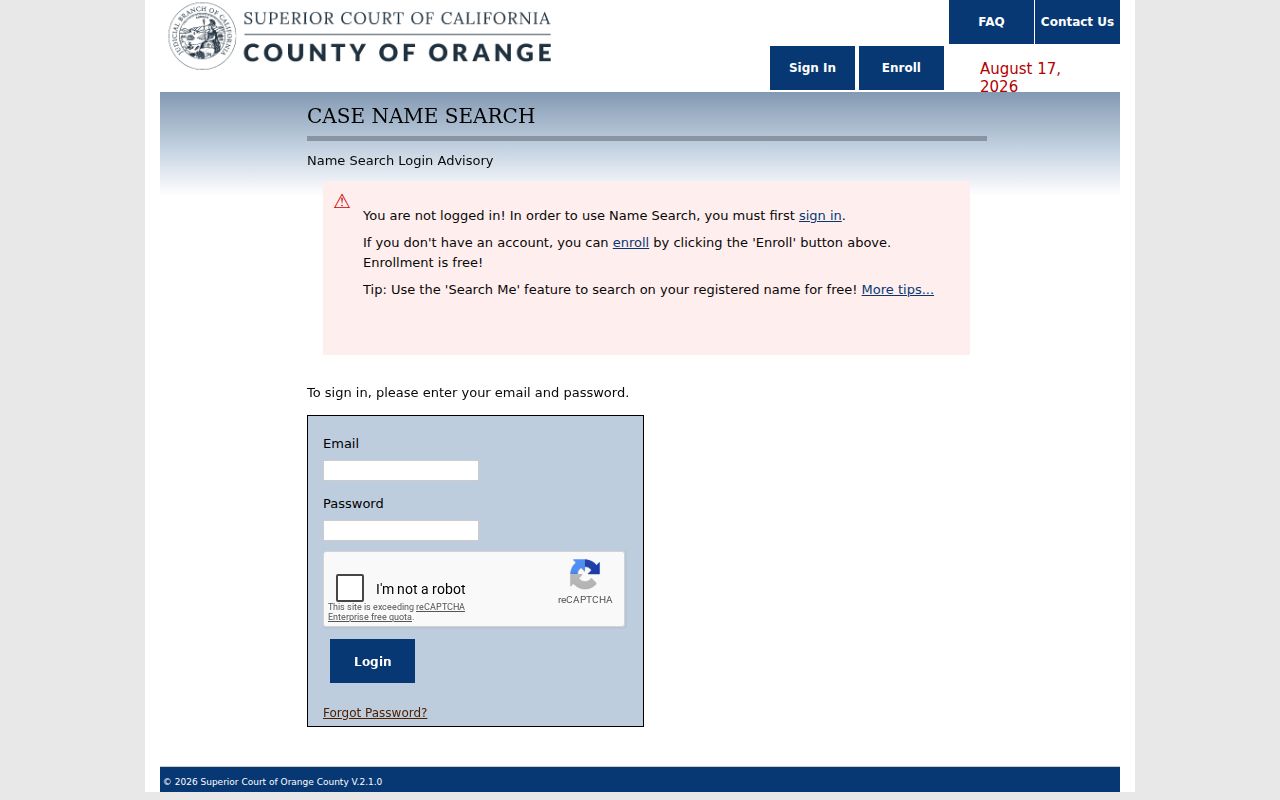
The separate Orange court name-search gateway is a paid or account-based path, not the same thing as a free docket image. Form L-3009 supplies a mail or in-person copy route with a justice center, subject name, case details, requested documents, delivery choice, and published search, page, certification, postage, or exemplification charges.
The Orange Superior Court L-3009 form is the direct copy and record-search request document.
- Use case number and party role to reduce same-name risk.
- Compare filing and hearing dates with the person's known chronology.
- Do not infer guilt from an arrest, filing, or docket entry.
- Expect juvenile, adoption, sealed, and some family or criminal material to be restricted.
California Vital Records Need the Right Copy
Orange County Clerk-Recorder and California Department of Public Health routes are record-specific. Birth, death, and public marriage certificates have different requester rules and copy types. Confidential marriages are restricted under Family Code section 509. Adoption originals are sealed under Health and Safety Code section 102730 and related law. A genealogy index may help locate an event, but it does not substitute for an eligible certificate.
| Birth | Authorized certified copies are limited by Health and Safety Code section 103526; an informational copy is marked and does not establish identity. |
|---|---|
| Death | County and state routes distinguish eligibility and informational access; genealogy indexes can be a finding aid. |
| Public marriage | County ordering and statewide routes supply event evidence, subject to the applicable copy category. |
| Divorce | Orange Superior Court holds the decree; CDPH's certificate of record is not the decree. |
County channels include in-person applications, mail applications with a sworn or notarized statement where required, and a stated 5-10 business-day mail process after receipt. The central vital-record office is at 601 N. Ross Street in Santa Ana, with North and South office routes also listed. County 2026 fees in the research are $34 for birth, $26 for death, and $19 for public marriage certificates; verify the current application before paying. CDPH lists a different fee schedule for its statewide copies.
The California Vital Records page explains state record types and ordering channels. The Orange County vital-records page supplies county forms and office details.
The California county registrar directory helps identify the local custodian for a vital event.
The county's 2026 vital-fee notice is the current fee reference identified in the research.
An Irvine Voter Lookup Is Self-Service
Orange County's Your Voter Information route is designed for a person to authenticate that person's own record. It asks for the full date of birth, the last four digits of a California license or ID or the stated SSN fallback, and the first three letters of the first name. The authenticated view can show status, name, mailing address, party, voter history, districts, ballot status, sample ballot, provisional-ballot checks, and address confirmation.
That is useful for a self-check, not an anonymous name search. Qualified voter-data applications require a wet signature, identification, permitted purpose, security details, supporting material, and payment. The county's application cites Elections Code sections 2188, 2194, and 18109, Government Code section 7924.000, and 2 CCR sections 19001 through 19013. A resident lookup should never publish the protected fields or turn a lawful data request into a public list.
The Orange County voter self-service lookup is the appropriate personal route.
Irvine Obituaries Can Bridge a Missing Name
Obituaries and local newspapers can solve a resident lookup that stalls between a directory year and a later official record. OCPL's obituary guidance identifies the California Death Records Index for 1940-1997, NewsBank and Orange County Register coverage after January 1, 1987, and Register microfilm for earlier periods. Irvine World News coverage begins in the documented 2003-current range. Search surname variants with a street, family member, club, school, or date.
Library staff can help with OCR errors and branch access. An obituary is a family-authored or newspaper-published clue, not the same as a certified death record. Use it to identify a decedent, relatives, a former city, or a probate lead, then confirm the event through the Clerk-Recorder, CDPH, court, or archive route that holds the formal record.
OCPL obituary research guidance gives the documented index, newspaper, microfilm, and staff-help path.
Irvine Public Safety Tools Ask Different Questions
Custody and registry tools are specialized public-record routes, not general residents directories. California's Megan's Law website supports name and map or area searches with disclosure categories and explicit anti-harassment warnings. A registry result describes the information the law permits to be shown; it does not create a complete list of Irvine residents or prove that every address is displayed.
The California Department of Corrections and Rehabilitation incarcerated-person locator uses a last or first name or CDCR number and can return current location, status, and basic commitment or release information within its published limits. The Orange County Sheriff enhanced inmate system requires an email and password account and expressly does not expose charges. County custody and state custody are separate systems, and a booking is not a conviction.
The California Megan's Law registry explains its public search and misuse warnings.
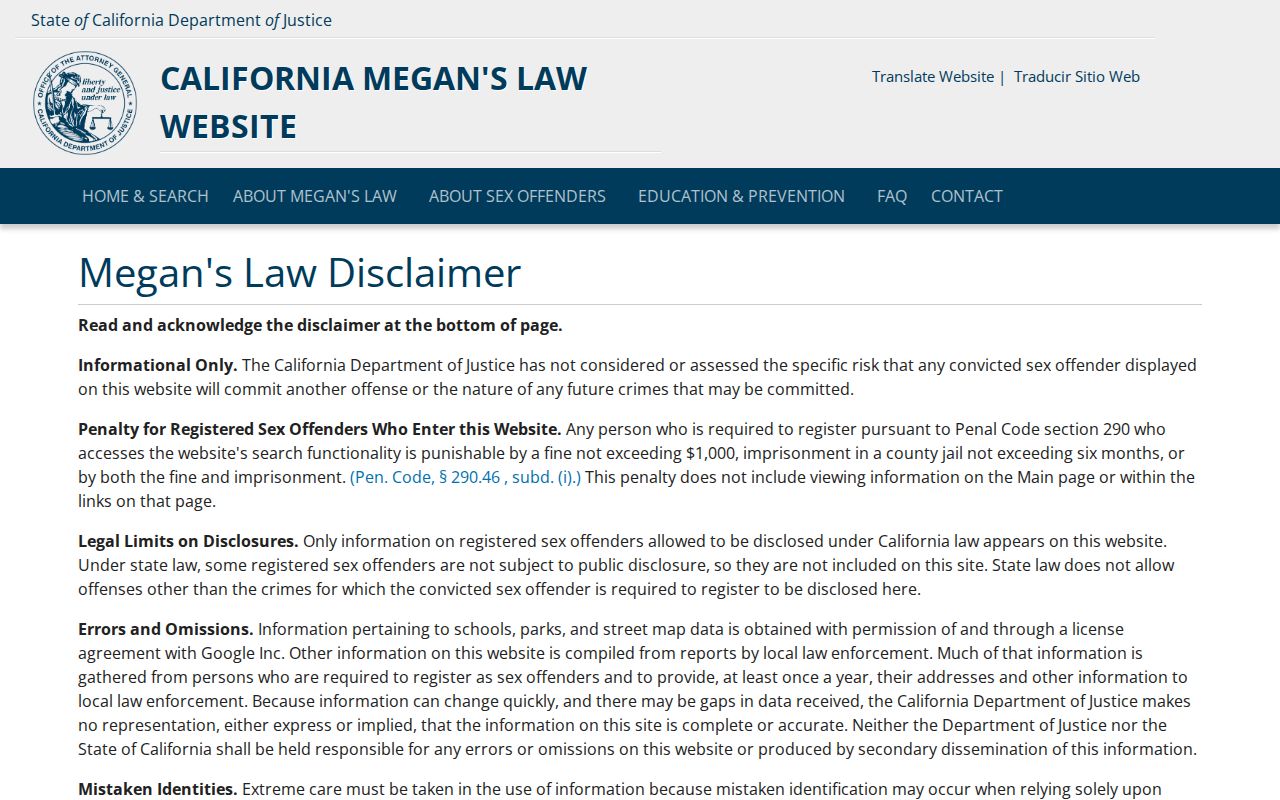
The image shows a specialized registry interface, not a broad Irvine resident lookup.
The CDCR incarcerated-person locator is the separate state custody route.
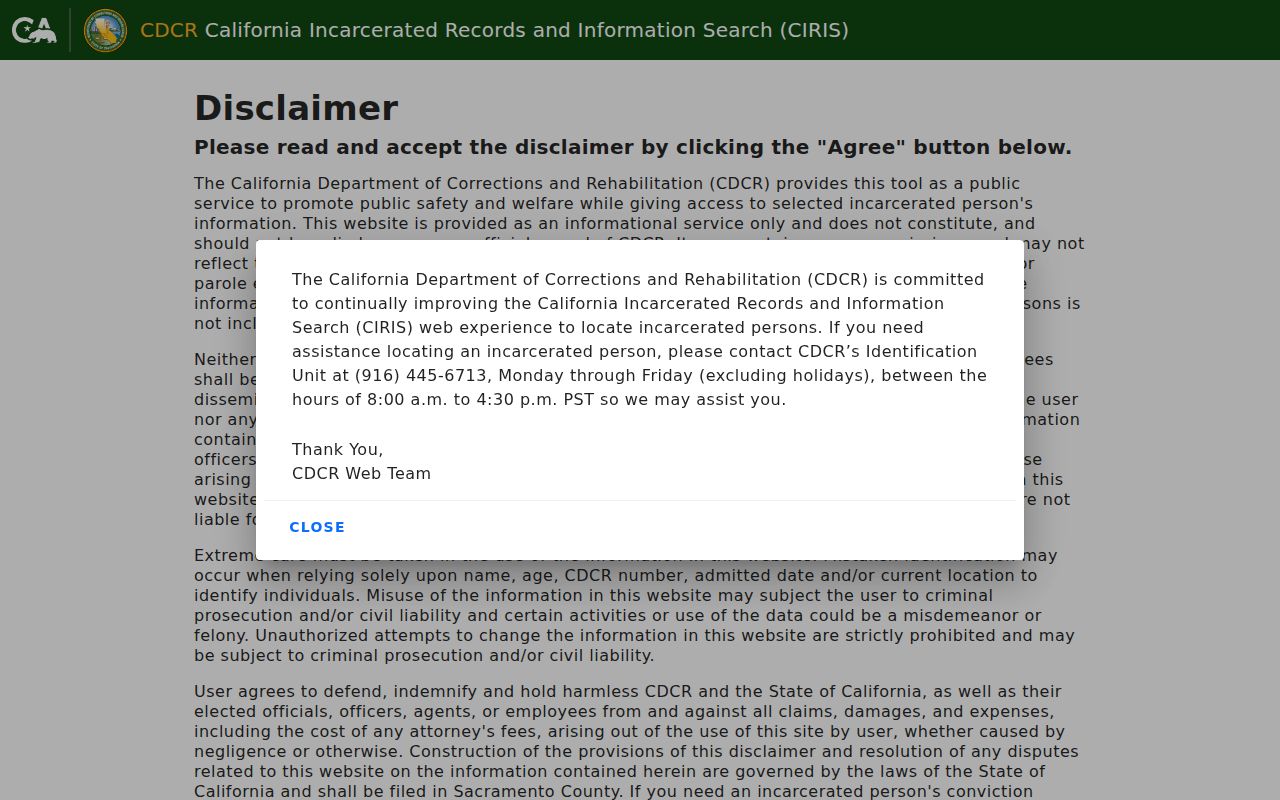
Use a court disposition or custodian record to confirm what a custody result means. Do not treat a public-safety listing as a shortcut around privacy or due process.
Irvine Business and License Records Confirm Affiliations
Formal business and professional records can separate two people with the same name. California Secretary of State bizfile Online can expose an entity name and number, formation or registration date, status, jurisdiction, agent and address, officers, managers, filing history, and imaged statements. Orange County fictitious-business-name records can connect a DBA to a registrant. Those are affiliation records, not residence proof.
Department of Consumer Affairs and specialized boards may show license type and number, status, issue or expiration dates, an address of record, and public discipline. The California Department of Consumer Affairs license search is the statewide starting point. Pair a license with a middle name, chronology, business entity, permit applicant, or public court role. Do not treat a work, agent, or practice address as a home address.
The Irvine licensed-business list shows the city's named business-record route.
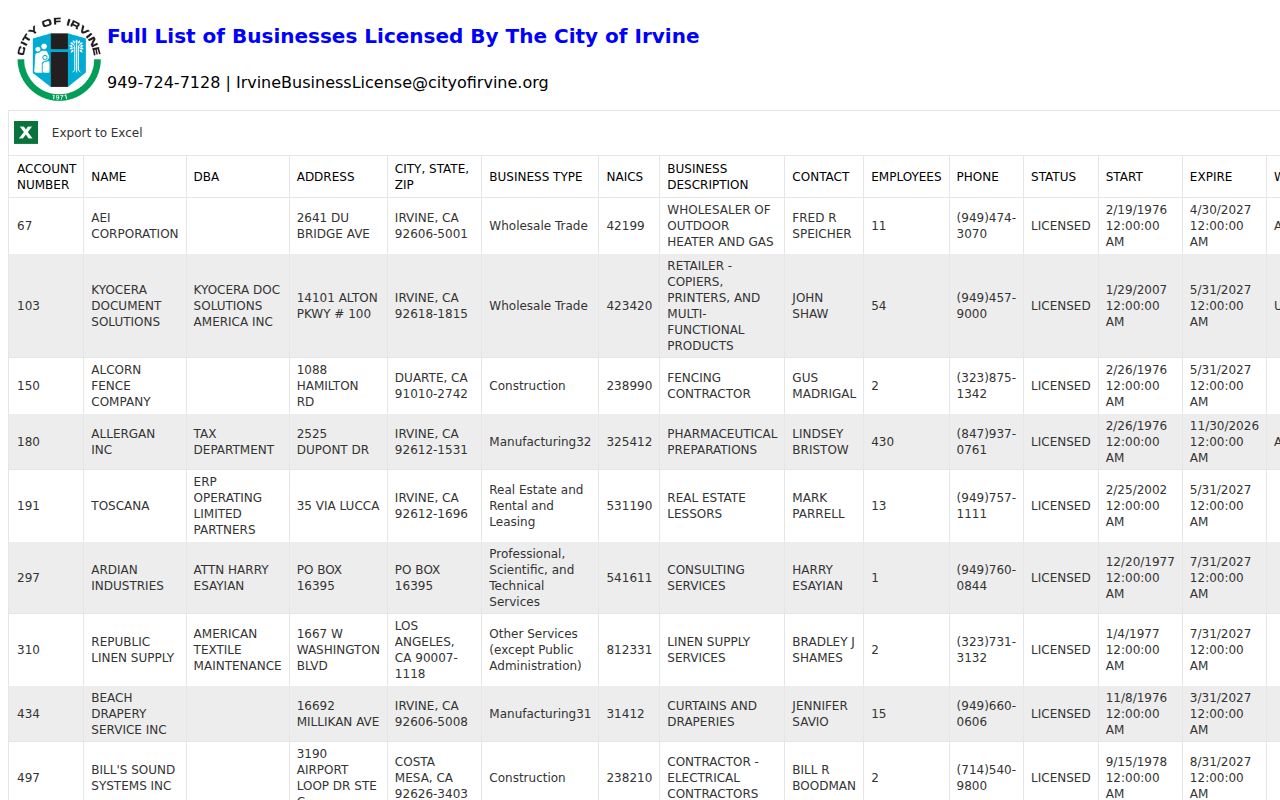
The business result connects a name to a formal local activity, which is a different claim from identifying a resident at a parcel.
Federal Cases Need PACER in an Irvine Resident Lookup
Orange Superior Court does not replace the federal court system. Federal cases for Irvine people are searched through PACER for the U.S. District Court, Central District of California. A federal case search can use party name or case number and return docket events, parties, filing information, and public PDFs subject to access and sealing rules.
PACER requires an account. The research records a $0.10 per page charge, usually capped at $3 per document, with a quarterly fee waiver when current charges are $30 or less under the stated policy. Use federal results to confirm a case and party chronology, then avoid inferring an address from a court filing unless the public document actually supplies a lawful, relevant locality clue.
The PACER federal court search is the separate federal route.
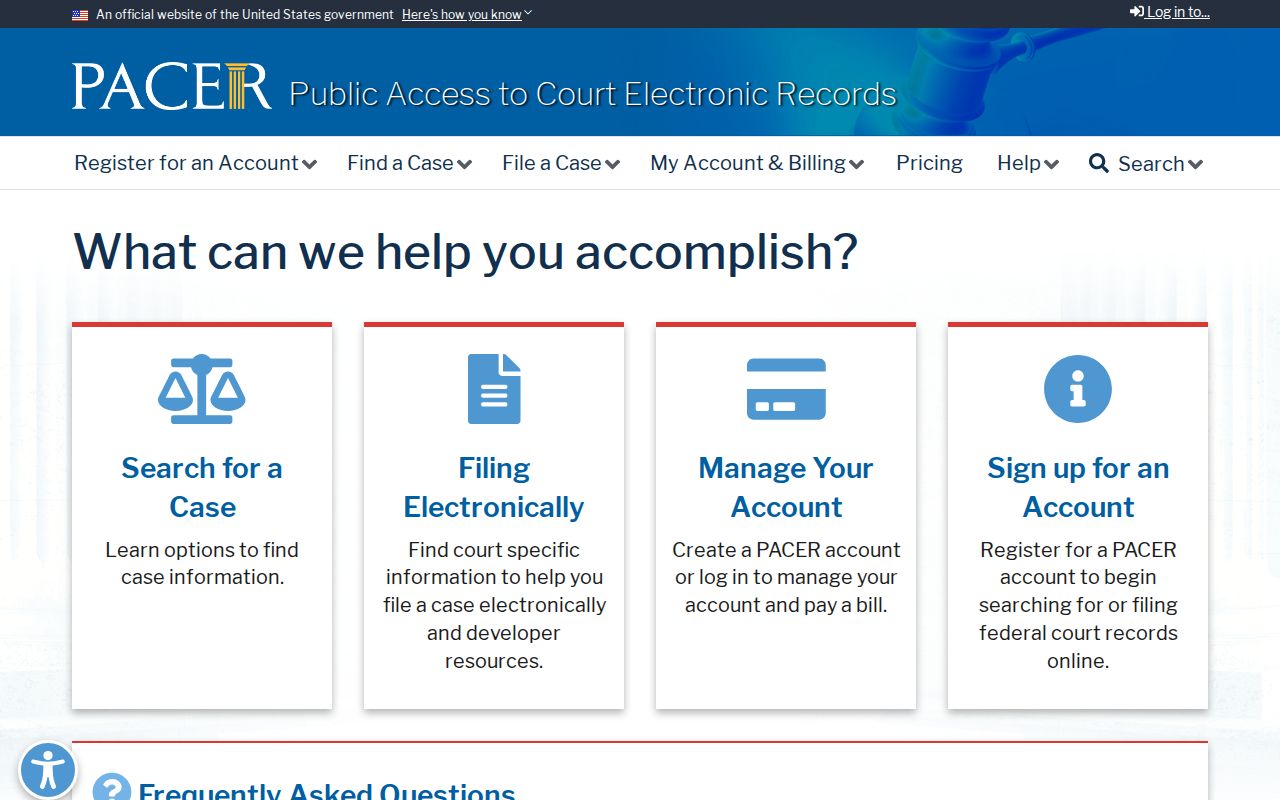
A federal docket is one record layer. It should be joined to an independent source, never used as an all-purpose resident directory.
Boundaries on an Irvine Resident Lookup
California's privacy rules are part of the result. Safe at Home gives qualifying survivors and reproductive-health personnel a substitute mailing address in specified public records. A protected address missing from a search is a safeguard, not an error to bypass. Voter, DMV, court, vital, adoption, and juvenile records carry their own limits, and a California Public Records Act request cannot override a confidentiality statute.
When a source is wrong, correct the source rather than an aggregated profile. Contact the Assessor for an assessment field, the Clerk-Recorder for a recording issue, the court clerk for a docket matter, the Registrar for voter information, or the issuing board for a license. For an identifiable existing city record, California's CPRA determination rule is the fallback, but the agency need not create a new dossier.
Lawful use. An Irvine resident lookup is for personal, lawful research, family history, reconnection, and civic understanding. Do not use a result to stalk, harass, intimidate, or threaten anyone, and do not try to uncover a protected address.
The California Safe at Home program explains why some residence information is intentionally shielded.